Working Principle of Hot Runner Temperature Controller

0818

In a hot runner system, the hot runner temperature controller is responsible for precisely controlling the melt temperature to ensure the quality of injection-molded products. The stability of its temperature control directly affects the final product's quality. Below, we will detail the working principle of the hot runner temperature controller and its key components.

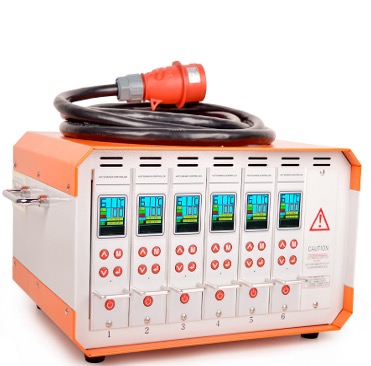
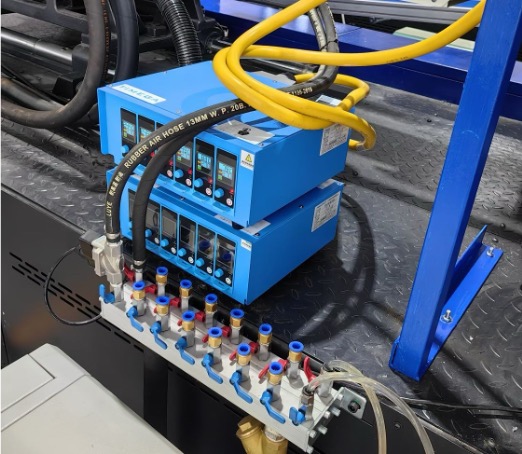
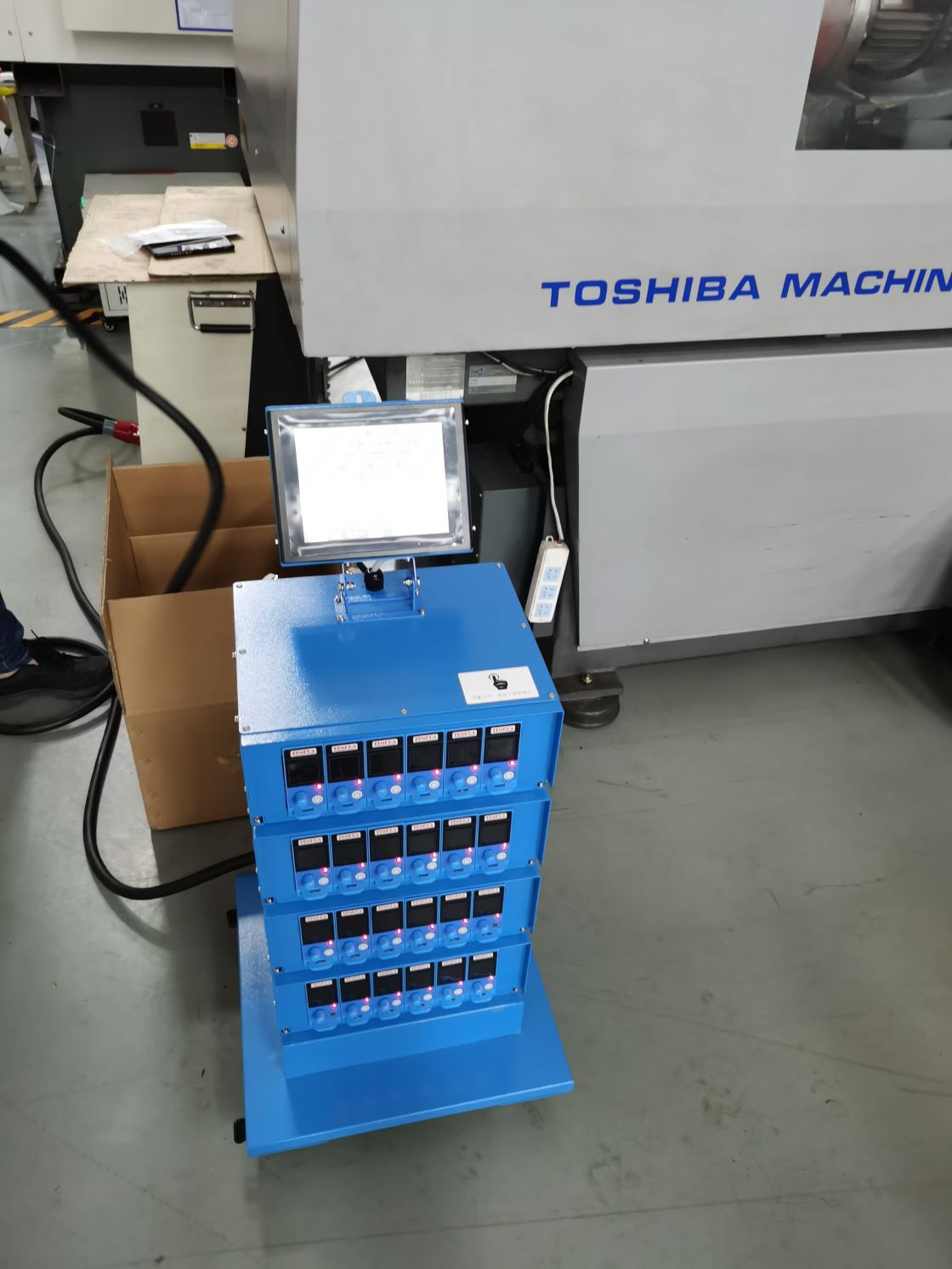
Hot Runner Temperature Controller
0316-2

Key Components


1. Heater
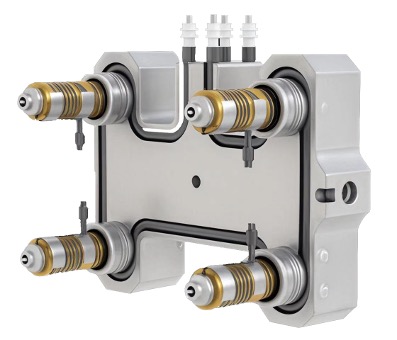
 Hot runner systems typically use electric heaters, which offer advantages such as small size, fast heating speed, and lower cost compared to oil heaters. Common electric heaters operate at voltages between 200-240V, while some hot runner companies also use low-voltage heaters.
2. Temperature Sensor
 Temperature sensors are crucial for ensuring accurate temperature measurement. Common types include resistance temperature detectors (RTDs) and thermocouples. Due to the limited temperature range of RTDs (usually not exceeding 250°C), hot runner systems generally prefer thermocouples, which have a wider temperature range.
3. Temperature Controller
Given the high temperature control requirements and harsh working environment of hot runner systems, specialized hot runner temperature controllers are used instead of conventional temperature control instruments. For ease of replacement and maintenance, these controllers often feature a plug-in design, known as hot runner temperature control cards. These control cards are powerful and easy to maintain.

Work Process


The work process of the hot runner temperature controller is as follows:
  • Signal Acquisition: The hot runner temperature control card periodically collects temperature signals from the thermocouple sensor and calculates the current actual temperature of the hot runner system.
  • Temperature Comparison: The CPU compares the actual temperature with the preset target temperature, performs control calculations, and determines the power required for the heater.
  • Power Adjustment: By adjusting the power output of the heater, the system achieves precise temperature control, ensuring that the temperature remains within the set range.
    Through this method, the hot runner temperature controller continuously monitors and regulates the temperature, maintaining the melt temperature in the optimal state during the injection molding process. This results in improved production efficiency and product quality.
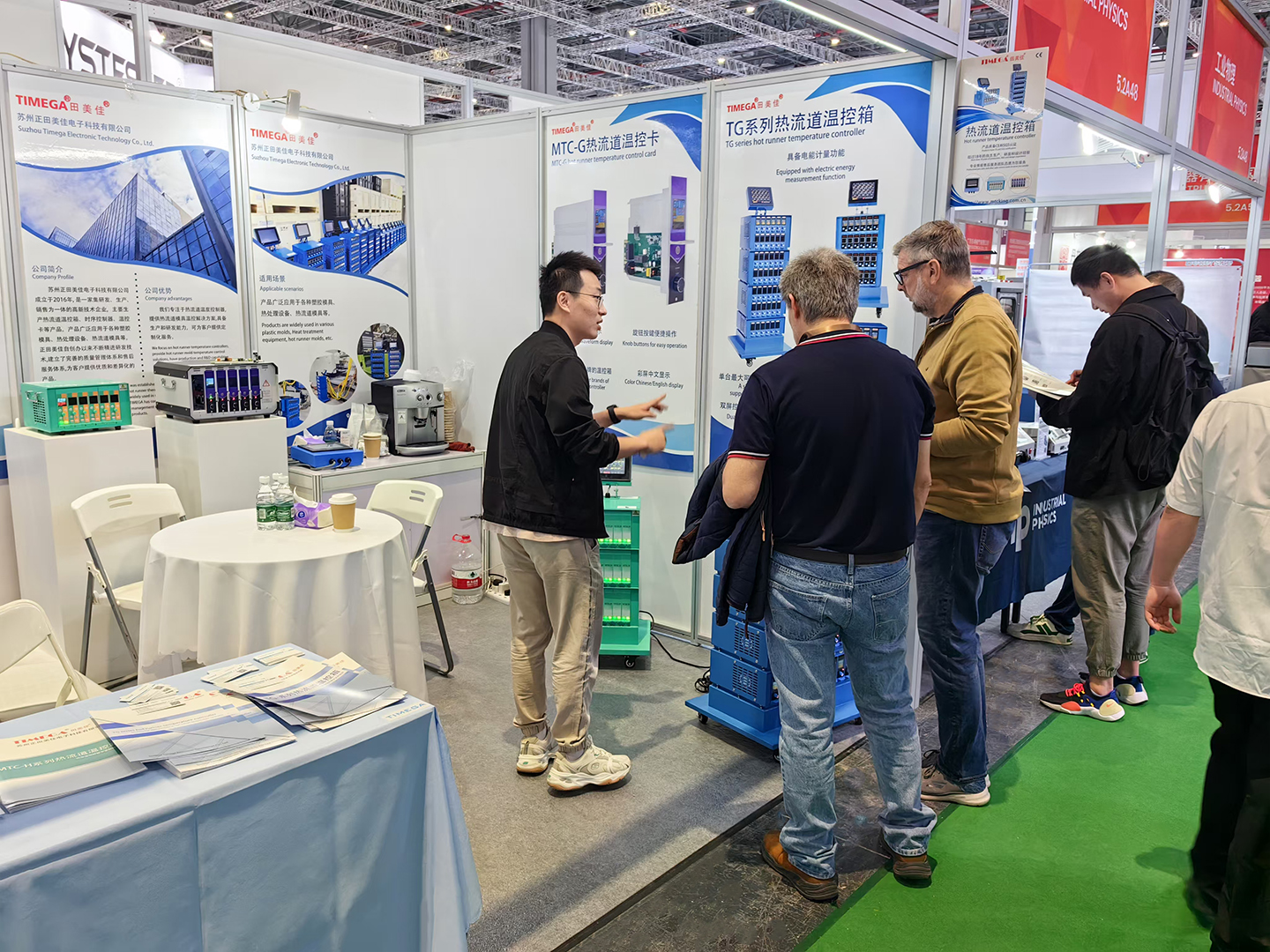

2024 China Asia-Pacific Plastics and Rubber Exhibition

QQ图片20250316204535
0316-scaled

On April 23, 2024, our company participated in the China Asia-Pacific Plastics and Rubber Exhibition. The exhibition was highly successful and received recognition from many customers.

What is Hot Runner Controller ?

0305

Hot runner system plays a significant role in the plastics industry. Hot runner molding includes nozzles, manifolds, hot runner controllers, and auxiliary components. It is also known as a hot runner controller.

The temperature controller, as a common part of injection molds, controls the heating process to ensure that the molten material flows smoothly through the runners and gates. Typically, cartridge heaters and coil heaters are installed within the manifold. Hot runner molds are easier to start because there's no need to remove solidified runners after each under-filled shot until a full mold shot is achieved and automatic cycling can begin. In hot runner systems, once the system reaches its operating temperature, the mold is ready to run.

What Does a Hot Runner Controller Include?

A hot runner controller generally includes:

  • Hot Runner Control Modules
  • Air Circuit Breaker
  • Mainframe
  • Connectors
  • Control Cables

Hot runner accessories include:

  • Heaters
  • Thermocouples
  • Connectors
  • Junction Boxes

What is a hot runner system?

0103

The hot runner technology was introduced into the plastics industry more than 50 years ago. It has revolutionized the processing capabilities of injection molding by improving the quality of molded parts, enhancing operational efficiency, reducing waste, and saving costs. The main advantages of hot runner technology:

  • Provide high-quality parts for various applications.
  • Prevent overfilling or under-filling of parts.
  • No sink marks or flash formation on the mold components.
  • Improve production efficiency.
  • Reduce resin waste.
  • Shorten the cycle time.
  • Offer flexible design and provide customized solutions.

How does a hot runner injection molding system work?

Unlike the gate and runner system used in a cold runner system, the hot runner injects the plastic directly into the cavity. One of the greatest advantages of the hot runner system is that the plastic in the runner never solidifies. This reduces the cycle time and allows for faster processing. Another advantage of this system is the reduction of plastic waste, as the material does not harden until the mold is filled. Since there is no gate system, the amount of trimming work required to make the surface of the final product smooth is greatly reduced. The hot runner operates through an additional runner plate, which is fixed to the mold assembly.

How does a hot runner controller work?

What is a hot runner temperature controller?

231201

A hot runner controller is a specialized temperature controller that maintains dedicated injection molding components at the design temperature to ensure continuous flow of the mold material. This helps in producing the most consistent products. As one of the essential accessories of the hot runner system, the hot runner controller is interdependent with the hot runner system but relatively independent. Its accuracy and stability significantly impact the hot runner system, while the hot runner system also influences the hot runner controller's accuracy, stability, and service life.

Applications

  • Appliances

  • Automotive

  • Medical devices

  • Packaging

  • Electronics

Types of Hot Runner Controllers Widely Used in the Market

  • HMI-based hot runner controllers

  • Standard plug-in hot runner controllers

  • One card control two zones controllers

Components of a Hot Runner Controller

  • Control module

  • Mainframe

  • Connectors and cables

How Does a Hot Runner Controller Work?

  1. Limit Control: Establishes set points that, when reached, send a signal from the hot runner controller to stop or start a process variable.
  2. Linear Control: Matches a variable input signal with a correspondingly variable control signal.
  3. PID Control: Monitors the error between the desired value and the actual value.
  4. Fuzzy Logic: A hot runner temperature control technique where variables can have imprecise values (e.g., partial truth) rather than binary states (completely true or completely false).
  5. Advanced or Non-linear Controls: Such as neural networking, adaptive gain, or emerging algorithms.

Hot runner systems provide superior injection molding results. The brains of these systems are the temperature controllers, which allow the system to operate optimally with minimal waste and improved quality.